If you’re running a small or medium-sized business, you’re already making decisions every day that involve governance, risk, and compliance, even if you don’t use those exact words.
GRC might sound like corporate jargon. It’s often associated with large enterprises, legal teams, and regulatory audits. But governance, risk, and compliance are everyday concerns for any business. Especially SMEs trying to grow responsibly in a fast-changing world.
Let’s explore what GRC actually means, and why it’s worth your attention as a growing business.
Key Takeaways
GRC stands for Governance, Risk and Compliance. It is important for SMEs because it establishes clarity in decision-making, helps identify and manage risks, and ensures businesses meet legal and contractual obligations – enhancing credibility and trust.
Yes, SMEs can start by clearly defining roles and responsibilities, creating simple policies and establishing accountability structures. Good governance s rooted in clarity – not complexity – and can be scaled as the business grows.
Key risks include operational inefficiencies, financial exposure, cybersecurity threats, reputational issues and compliance risks – especially around data protection and regulatory obligations.
What is GRC?
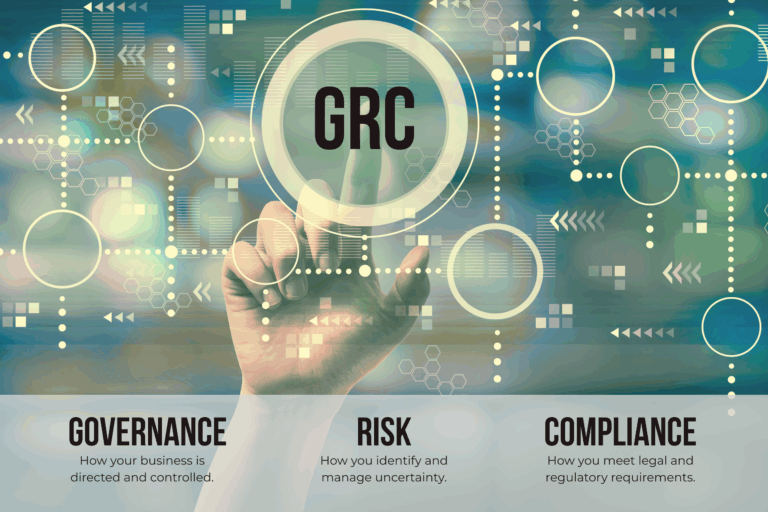
GRC is a way of thinking about how your business is run, protected, and accountable. It’s made up of three key areas:
Governance
How your business is directed and controlled:
- Defines roles, responsibilities, and decision-making structures
- Establishes policies, values, and ethical standards
- Ensures accountability and alignment with business objectives
Good governance helps you run your business more efficiently, avoid internal confusion, and ensure that the right people are responsible for the right things.
Risk Management
How you deal with uncertainty:
- Identifies threats and opportunities that could impact your goals
- Assesses and prioritises operational, financial, cyber, and reputational risks
- Helps you take action before problems become costly or damaging
Effective risk management helps SMEs stay resilient and adaptable, especially during times of change or rapid growth.
Compliance
How you meet legal and regulatory requirements:
- Tracks the laws, standards, and contracts your business needs to follow
- Ensures your operations, staff, and partners are aligned with those obligations
- Reduces the risk of penalties, reputational harm, or lost business opportunities
In today’s business environment, even small businesses are expected to prove they are playing by the rules, especially when working with bigger clients, dealing with data, or entering new markets.
Put simply, GRC is about doing the right things, in the right way, with visibility and accountability.
Why GRC matters for SMEs
You might not have a legal department, risk committee, or compliance officer, but you still face many of the same pressures larger organisations do:
- Evolving regulatory expectations
- Increased customer scrutiny
- Cybersecurity and data privacy risks
- Supply chain and third-party dependencies and risks
- The need for operational clarity and internal accountability
- GRC provides a framework to deal with all of this in a structured and proactive way.
It helps you to make better decisions and build trust with your clients and stakeholders. It also also helps you stay ahead of the evolving risk landscape, instead of just reacting to them as they arise. GRC creates a solid foundation for sustainable and responsible growth.
GRC doesn’t have to be complicated
For SMEs, the goal isn’t to replicate what large enterprises do. It’s about finding practical and proportionate ways to manage your governance, risk, and compliance needs.
Examples of SME-focused GRC activities may include:
- Defining clear roles and responsibilities in your leadership team
- Developing practical policies that reflect how your business actually operates
- Proactively managing risks – legal, financial, operational, cyber – that could derail growth
- Meeting compliance obligations without getting lost in complexity
- Aligning your operations with your values, and building trust with customers, partners, and regulators
Think of GRC as part of building a strong, resilient business. It’s not just a tick-box exercise, it adds direct value to your business operations, and ensures that your business is protected.
Key areas of GRC for SMEs
- Data Protection – ensuring compliance with POPIA regulation to ensure personal information is handled in line with the law.
- Financial compliance – ensuring compliance with all financial and tax related regulation.
- Cyber Security – guarding against cyber attacks such as ransomware.
- Information security – managing risks to information assets.
- Employee safety and HR compliance – ensuring compliance with relevant labour and employment laws and regulations.
Conclusion
GRC might not be the most exciting topic, but it’s one of the most important if you want to grow your business with confidence, credibility, and control.
You don’t need to build a legal department or hire a chief compliance officer to get started with GRC. You need practical tools, clear thinking, and a partners who understands the realities of running a small or medium business. Start small. Stay practical. And remember: it’s easier to put GRC in place when things are going well than to scramble after something goes wrong.
Get in touch with us to discuss your needs and find out more about where we can assist you to get started on the right path.