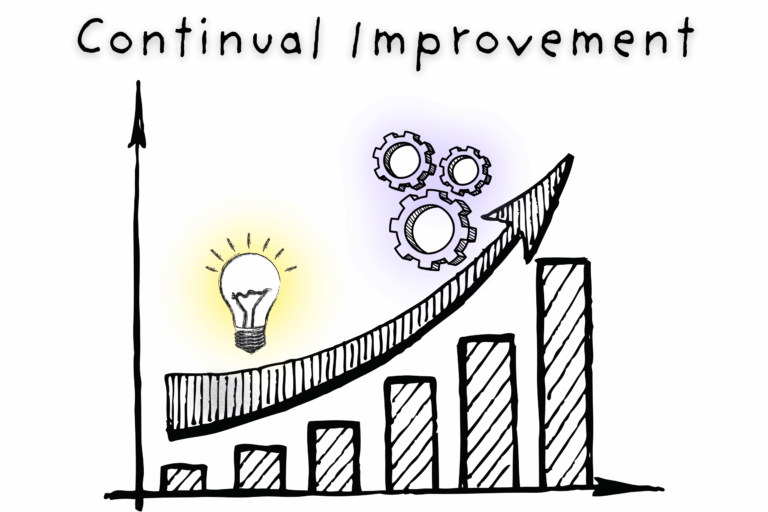
The business world is seriously competitive, and the only way to survive and stay ahead is to adapt, innovate and keep up with rapidly changing trends and threats. To make these kinds of continual improvements, you not only need to refine processes, but also embed a mindset within the workforce that embraces change, adapts to new trends and celebrates excellence.
This approach can drive business value by making things run more smoothly, encouraging employees to engage more and staying ahead of competitors. These elements will ultimately lead to higher customer satisfaction and more business coming your way. This article discusses how the culture of continual improvement can increase business value, as well as some of the strategies your company could adopt to foster it.
Key Takeaways
Continual improvement is an ongoing effort to enhance processes, products, or operations, often through small, consistent changes. For SMEs, it boosts efficiency, resilience, and competitiveness.
Start by encouraging employee input, tracking simple metrics, and regularly reviewing workflows. Integrate small adjustments into daily routines to foster a culture of improvement.
By streamlining processes, reducing waste, and adapting to evolving needs, SMEs can improve customer satisfaction, reduce costs, and position themselves for sustainable growth.
Kaizen is a Japanese term meaning ‘change for the better’. This concept emphasises small, incremental and ongoing enhancements, rather than a single major overhaul. It is a practice of self-reflection, learning and growth and is required to develop a culture of continual improvement.
It includes encouraging your teams to identify inefficiencies and proactively find solutions to problems. The focus of continual improvement is on adapting and challenging the status quo to be able to deliver better quality, more efficiently and delight your customer’s.
It is empowering for employees and providing them with tools and resources to achieve these changes is a vital part of the culture.
The culture of continual improvement needs everyone, from top management to frontline employees, to embrace a mindset that places high value on progress and continuous learning.
What moves the needle?
Increased business value can be measured by monitoring metrics such as the following:
Operational efficiency
Through activities such as streamlining processes, reducing waste and making the best use of available resources, you could end up with significant cost savings, increased productivity and better use of time, skills and technology.
Toyota embraced the Kaizen philosophy and it has become ingrained in their production philosophy as well as in their overall culture. They are seen as industry leaders when it comes to efficiency and this is largely due to continuous refinements to their production processes.
Innovation
Encouraging employees to think creatively and not be afraid to challenge the status quo, by inspiring them to suggest improvements, your organisation could benefit from diverse perspectives and ideas. Innovation in products and services can benefit market standings in a rapidly changing market. Enhancing workflows, reducing costs or improving quality can strengthen processes whilst agility and adaptability to customer and market needs will enhance profitability and reputation.
3M adopted a ‘15% rule’ whereby employees are urged to spend 15% of their time on innovative projects. This led to breakthroughs like the development of Post-It Notes.
Customer loyalty and satisfaction
Through a consistent process of refining products and services, your business can better meet and possibly exceed, your customer’s expectations. You can expect to achieve higher customer retention and a positive brand reputation. Customers will appreciate and respond to faster and more streamlined problem resolution. Your customers become product advocates and brand ambassadors.
Amazon has become a leader in customer satisfaction through relentless focus on improving their customer’s experiences – faster deliveries, more intuitive website features and vast product selections have contributed to customer retention.
Employee engagement and retention
Employees tend to thrive when they feel their ideas are valued and they are encouraged to contribute. Taking the initiative, learning and growing within the workspace are part of the continual improvement culture. This working environment supports enhancement of employee skills which in turn can lead to higher morale and reduced employee turnover.
Companies like Google and Adobe are known to have high employee job satisfaction. This can be attributed to their receptive policies towards worker suggestions and innovations.
Risk management and compliance
Effective risk management and regulatory compliance is a vital part of the continual improvement mindset. Proactively identifying and mitigating risks by regularly assessing processes will be invaluable when it comes to recognising technical vulnerabilities and your risk of non-compliance with local regulators. As technology changes and regulatory requirements evolve, proactive risk management saves time and effort down the line, giving you opportunities for improvement before critical issues are realised.
Strategies
Here are a few strategies that you can employ to help you cultivate a culture of continual improvement in your organisation.
Lead from the front
Change, as they say, starts at the top. Leadership commitment is paramount. It is vital that management not only practice the mindset themselves, but communicate its importance to the entire organisation too. Set clear and concise goals, recognise and reward employees who contribute and provide ongoing support for training and development.
Empower your employees
Empowered employees are invested in your business. Let them know they are an integral part of the process and encourage them to contribute. Provide sufficient training, tools and opportunities to allow employees to tap into their natural curiosity, experiment and learn from their mistakes.
Create a feedback loop
Regular reviews and concise, constructive feedback is vital in identifying and targeting areas that need improvement. Periodically conducting process reviews and audits, creating feedback loops and adjusting strategies are all conducive to achieving better results. Use data-driven metrics to track progress.
Embrace technology and automation
Use available technology and tools to accelerate and streamline arduous processes, and free up your employees for other, more strategic, tasks. Data analytics can be used to identify inefficiencies and optimise processes whilst monitoring tools are available to provide alerts when problems arise.
Conclusion
In summary, a culture of continual improvement is a powerful driver of business success. It enhances operational efficiency, fosters innovation, improves customer satisfaction, and boosts employee engagement. Organisations that embrace this mindset are better positioned to adapt to changing market conditions, mitigate risks, and maintain a competitive edge.
By investing in continuous learning, empowering employees, and leveraging technology, businesses can create a sustainable culture of excellence that increases value for stakeholders and ensures long-term success.